
Krupa Homes : How to Select the Ideal Home Design That Fits Your Plot and Family Needs

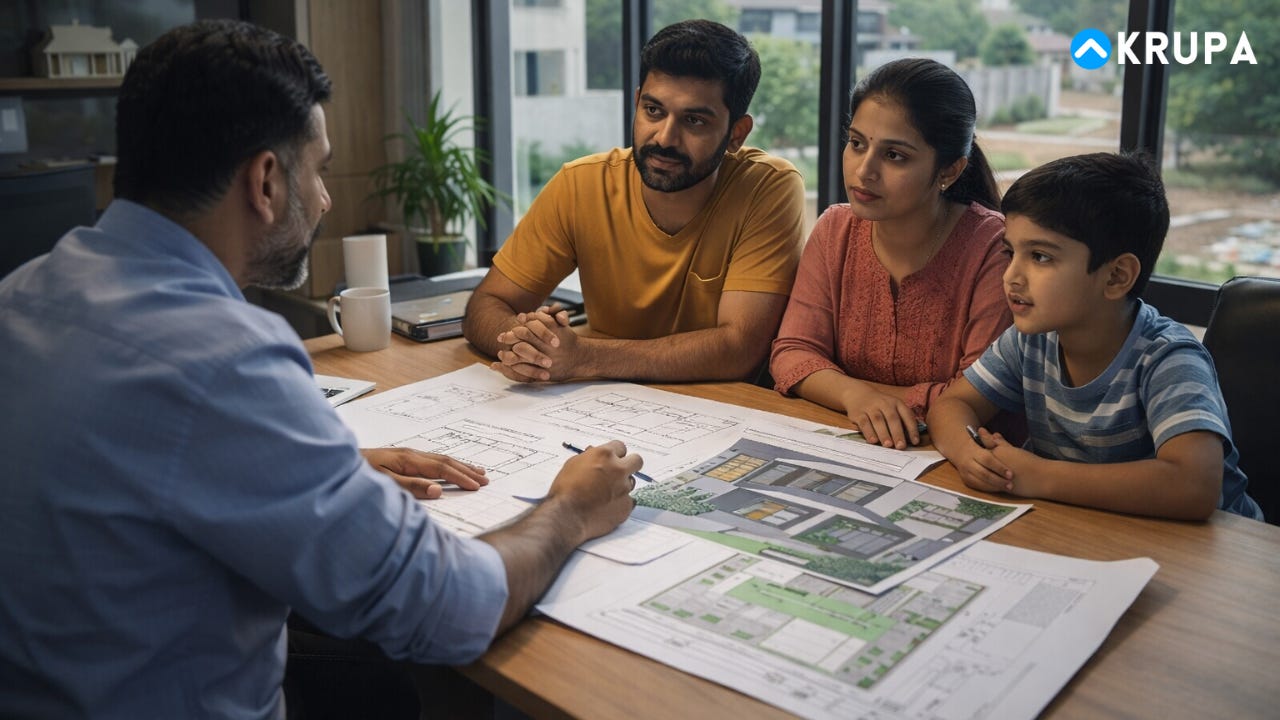
Designing your home is one of the most important decisions you’ll ever make. It goes far beyond visual appeal—your home design should respond intelligently to your plot, support your family’s lifestyle, stay compliant with regulations, and remain comfortable for years to come. A well-planned design helps you use space efficiently, improves ventilation and daylight, controls construction costs, and enhances everyday living.
Whether you own a compact city plot or a spacious suburban site, choosing the right home design starts with understanding your land and aligning it with how you want to live. This guide breaks down everything you need to consider before finalizing your home design.
1. Start with Your Plot Size
Plot size is the foundation of every design decision. It determines how much you can build, how high you can go, and how much open space you can retain. Your plot size directly affects:
Total built-up area
Number of floors permitted
Space for parking, setbacks, gardens, or courtyards
Compliance with FAR/FSI and local building rules
Smaller plots often benefit from compact or vertical layouts, while larger plots allow wider footprints and open planning. Knowing these limits early prevents costly revisions later.
2. Study Plot Dimensions and Shape
Every plot is different. Beyond size, the exact shape and boundaries influence how efficiently space can be used. Before designing, make sure you:
Confirm accurate length and width
Check for irregular angles or uneven boundaries
Identify road access points
Note any level differences or constraints
Regular plots are easier to plan, while corner plots offer better airflow and natural light. Even irregular plots can be designed beautifully with thoughtful planning.
3. Understand Orientation and Sun Movement
The direction your plot faces plays a big role in indoor comfort and energy efficiency.
North-facing plots receive consistent, soft daylight
East-facing plots enjoy pleasant morning sunlight
West-facing plots get strong evening sun and may need shading
South-facing plots tend to be warmer
Placing living spaces toward the north or east improves light and ventilation, while staircases and storage can act as heat buffers on the south or west. Smart orientation reduces energy use and improves comfort year-round.
4. Factor in Plot Level and Soil Conditions
The physical condition of your land affects both design and construction cost.
Flat plots are easier and more economical to build on
Sloping plots may need split-level designs or retaining structures
Poor drainage requires proper slope and foundation planning
In challenging terrains, consulting a structural expert early ensures safety and long-term durability.
5. Design Around Your Family’s Lifestyle
A good home reflects how its residents live. Before locking the layout, think about:
Current and future family size
Need for home office, study, guest room, or prayer space
Ground-floor bedroom requirements for elderly members
Preference for open layouts versus private rooms
Planning for flexibility ensures your home remains functional as your family grows or lifestyle changes.
6. Choose Layouts That Suit Your Plot Size
Small plots
Vertical construction (duplex or multi-storey)
Open layouts to reduce congestion
Large windows and skylights
Smart, built-in storage
Medium plots
Balanced 3–4 bedroom configurations
Family lounges or small courtyards
Clear separation of private and common areas
Large plots
Spread-out layouts with strong indoor-outdoor connection
Gardens, patios, and recreational spaces
Optional rooms like gyms or media rooms
Right-sized planning ensures every space feels purposeful.
7. Focus on Practicality Before Looks
While aesthetics matter, functionality should come first. A well-planned home ensures smooth movement and privacy:
Kitchen close to dining and living areas
Bedrooms placed away from noisy zones
Efficient bathroom and staircase placement
Minimal wasted space in corridors
Simple layouts often perform better—and cost less—than overly complex designs.
8. Plan Interiors Alongside Architecture
Interior design should not be an afterthought. Early planning helps you make better use of space through:
Neutral base colors with accent highlights
Multi-functional furniture
Built-in storage solutions
Natural materials for warmth and durability
Thoughtful interiors can make even smaller homes feel spacious and refined.
9. Align Design with Your Budget
Your budget plays a major role in shaping your home. Costs vary based on:
Built-up area
Structural complexity
Material and finish selection
Local labor costs
To stay within budget:
Keep structural forms simple
Avoid unnecessary projections and curves
Choose durable, cost-effective materials
Consider phased construction if required
Efficient design reduces both construction and long-term maintenance costs.
10. Follow Legal and Local Regulations
Before final approval, ensure your design complies with:
Local building bylaws
FAR/FSI limits
Setback and height regulations
Parking norms
Non-compliance can lead to penalties, delays, or demolition orders, making legal checks non-negotiable.
11. Incorporate Sustainable and Smart Features
Modern homes should be efficient and future-ready. Consider integrating:
Solar energy systems
Rainwater harvesting
Cross ventilation and natural lighting
Locally sourced, eco-friendly materials
Smart lighting and energy controls
Sustainable homes reduce utility bills and increase long-term property value.
12. Work with the Right Professionals
Experienced architects and designers help turn ideas into buildable, efficient homes. They assist with:
Maximizing plot potential
Structural safety and compliance
Light, ventilation, and spatial flow
3D visualization for better clarity
Professional input ensures your home is both beautiful and practical.
Quick Checklist Before Finalizing Your Design
Accurate plot measurements
Zoning and setback verification
Sunlight and airflow analysis
Family lifestyle assessment
Budget clarity
Sustainability planning
Expert consultation
Final Thoughts
Choosing the right home design is about balancing your plot’s potential with your family’s needs, budget, and future goals. A well-designed home is not just a structure—it’s a long-term investment in comfort, efficiency, and quality of life. When planned thoughtfully, your home will continue to serve you well for decades to come