

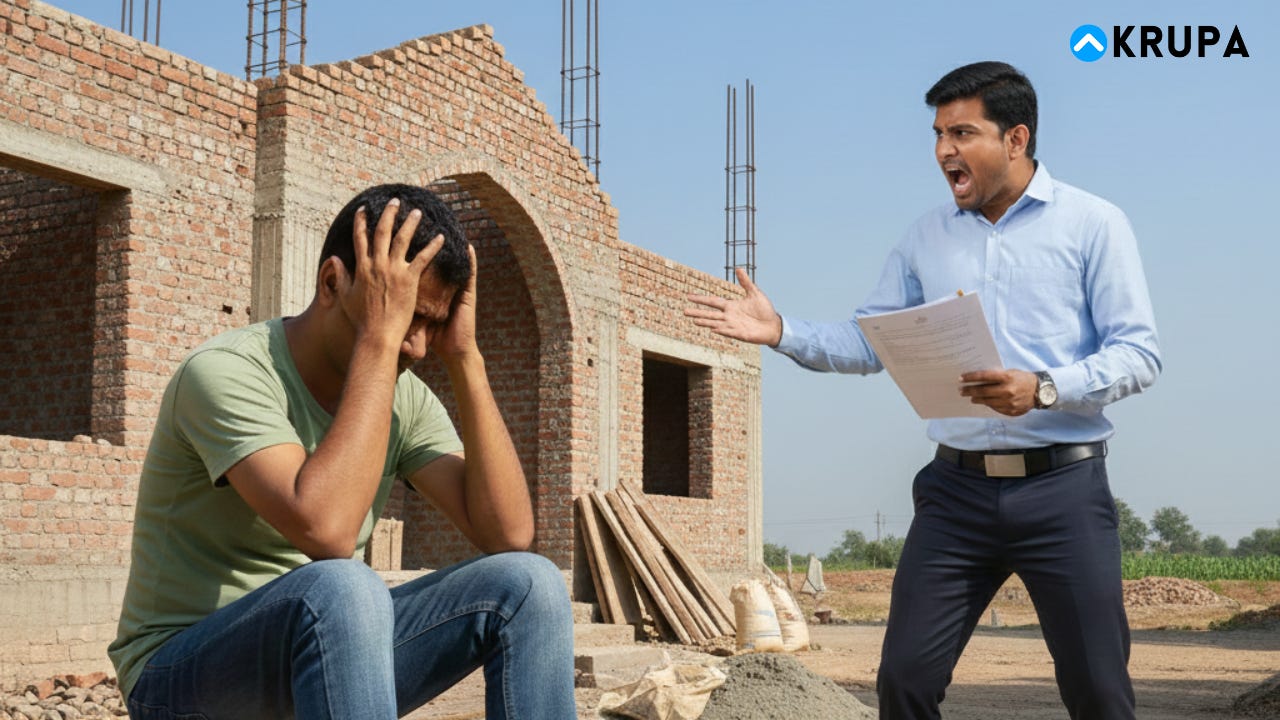
Constructing a home is one of the most emotional and financially important decisions in an Indian family’s life. While the dream of owning a house is exciting, the actual construction journey can quickly become stressful if mistakes are made early on. Many homeowners unknowingly repeat the same errors, leading to cost overruns, delays, and long-term maintenance issues.
Below are the most frequent mistakes people make while building a house in India along with practical insights to help you build smarter and stress-free.
1. Beginning Work Without Proper Planning
A major mistake is starting construction with only a rough idea instead of a detailed plan. Some homeowners believe decisions can be taken as work progresses, but this almost always results in confusion, rework, and wasted money.
Before construction begins, it is essential to finalize:
Architectural drawings
Structural designs
Budget estimates
Construction timelines
A well-defined plan ensures coordination between architects, engineers, and contractors, keeping the project smooth and predictable.
2. Skipping Soil Testing
Many homeowners ignore soil testing to save time or money, not realizing how critical it is. The soil type directly affects foundation strength. In many Indian cities, soil conditions can change drastically even within a short distance.
Without soil analysis, foundations may be improperly designed, leading to cracks, settlement issues, or moisture problems in the future. A basic soil test at the start helps engineers design a safe and durable foundation.
3. Neglecting Legal Approvals and Documentation
Construction without proper permissions is a risky move. Approvals from local authorities, adherence to setback rules, FAR limits, and zoning regulations are mandatory.
Failing to secure these can result in:
Stop-work notices
Heavy penalties
Difficulty obtaining occupancy certificates
Handling approvals early preferably through an experienced architect or consultant avoids legal trouble and future delays.
4. Selecting Contractors Solely Based on Price
Choosing the lowest quotation may seem economical, but it often leads to poor workmanship and hidden costs later. Extremely low prices usually indicate compromises in material quality, labour skills, or site supervision.
Instead of focusing only on cost:
Check previous projects
Speak to past clients
Review contracts carefully
Look for transparency in pricing and timelines
A reliable contractor delivers long-term value, not just short-term savings.
5. Compromising on Construction Materials
Reducing expenses by using low grade cement, steel, or waterproofing materials can seriously affect a building’s lifespan. Structural issues, wall cracks, and leakage problems often originate from poor material choices.
Using branded materials, proper curing methods, and professional waterproofing techniques is especially important in India’s diverse climate conditions.
6. Poor Ventilation and Lighting Design
A visually attractive house may still feel uncomfortable if ventilation and natural light are ignored. In warm and humid regions, poor airflow can make interiors hot and unhealthy.
Smart design should include:
Cross-ventilation
Well-placed windows
Open spaces or courtyards
Skylights where possible
Good ventilation reduces energy consumption and significantly improves living comfort.
7. Not Planning for the Future
Homes should be designed not just for today but for changing family needs. Many people fail to consider future requirements such as:
Elderly-friendly layouts
Space for home offices
Possibility of vertical expansion
Provision for lifts or additional rooms
Planning flexibility at the design stage saves major renovation costs later. Sustainability features like rainwater harvesting and solar readiness should also be planned early.
8. Lack of Regular Site Monitoring
Even with a good plan and contractor, poor supervision can lead to mistakes. Issues such as incorrect measurements, weak finishing, and improper installations often go unnoticed without regular site visits.
Consistent monitoring either by the homeowner or a professional project manager ensures quality control and timely correction of errors.
Conculsion :
Building a home in India is a long-term investment, both emotionally and financially. Most construction problems arise not from bad intentions but from lack of awareness and planning.
With the right preparation, trusted professionals, quality materials, and regular supervision, your home-building journey can be smooth and rewarding. A house built thoughtfully today becomes a safe, comfortable, and valuable asset for generations to come