
Krupa Market - India’s Steel Industry at a Turning Point: Policies, Demand, and Market Realities

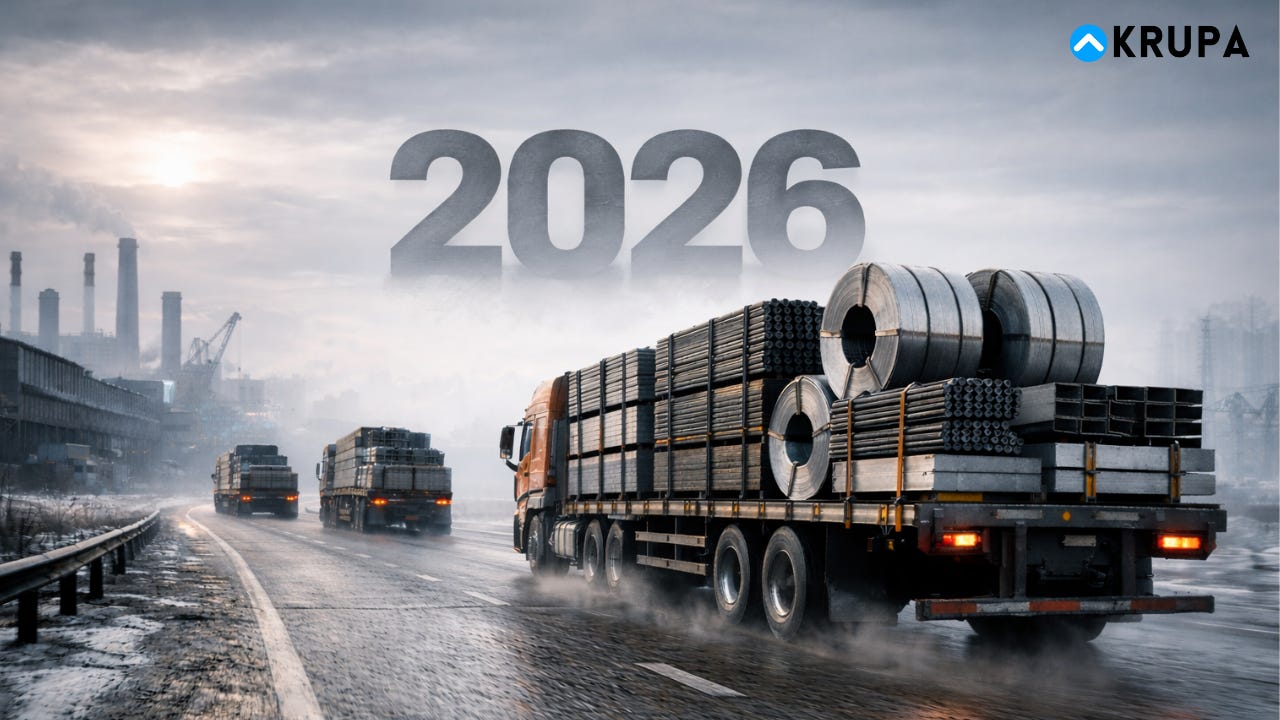
India’s steel industry is moving into a new phase, shaped by decisive policy actions, steady domestic demand, and changing global trade conditions. Rather than rapid, unchecked expansion, the sector is now focusing on stability, efficiency, and long-term competitiveness. Both producers and buyers are being forced to rethink strategies as the market recalibrates.
Why this “reset” matters
Steel remains a backbone of India’s growth story. From highways and rail networks to housing, manufacturing, and urban infrastructure, demand for steel is deeply linked to economic momentum. What has changed is the approach growth is now being guided by policy consistency, disciplined capacity expansion, and a stronger emphasis on value rather than volume.
Impact on producers
Greater attention to protecting margins instead of chasing volumes
Better control over capacity utilization and phased expansions
Strategic shielding from low-priced imports that distort domestic pricing
Impact on buyers
Shifts in sourcing strategies between domestic and imported steel
Increased price sensitivity driven by tariffs and supply regulation
Growing importance of long-term contracts and procurement planning
Policy direction: from reaction to structure
Government intervention has become a central pillar of the steel market’s evolution. Instead of short-term corrective measures, policymakers are now offering a predictable framework that supports domestic manufacturers while maintaining market balance.
A key tool in this strategy is the phased safeguard duty structure on select steel imports. Spread over three years, the gradual reduction in duties signals stability and avoids sudden shocks to the market. This approach helps domestic producers plan investments while discouraging dumping of cheap foreign steel.
Alongside trade protection, broader initiatives such as:
the PLI scheme for specialty steel,
the Green Steel Mission, and
export-oriented policy alignment
are pushing the industry toward higher value products, cleaner processes, and global competitiveness.
Demand strength and production trends
Domestic consumption continues to anchor India’s steel growth. Large scale infrastructure projects expressways, metro systems, freight corridors, ports, and urban redevelopment provide long-term visibility for demand.
Unlike many global markets facing stagnation, India’s steel production continues to expand, largely driven by internal consumption rather than exports. Producers are operating at healthy utilization levels while aligning maintenance schedules and upgrades with demand cycles.
This divergence from global trends reinforces India’s position as one of the few major steel markets with sustained growth momentum.
Global trade pressures and exports
Despite strong domestic fundamentals, international challenges remain. Excess capacity in countries like China and aggressive export pricing from East Asia continue to pressure Indian steel prices.
Safeguard duties have reduced the immediate impact of these imports, but exporters still face hurdles abroad ranging from quota restrictions in Europe to evolving trade regulations and geopolitical risks.
India’s long-term strategy lies in balancing internal protection with gradual expansion into diversified export markets, supported by diplomatic and trade negotiations.
Industry performance snapshot
Recent developments have reflected positively on large Indian steelmakers:
Improved investor sentiment following tariff announcements
Strong operational performance and record output levels
Controlled expansion plans focused on efficiency
However, rising input costs particularly energy and raw materials—continue to strain margins. Smaller manufacturers and downstream users feel the pressure more acutely, especially when prices rise faster than contract cycles.
Key challenges ahead
The industry still faces several structural and operational risks:
Persistent global overcapacity and price competition
Volatile raw material markets, especially iron ore and coking coal
Higher logistics and compliance costs
Increasing environmental obligations
Strategic responses and solutions
To navigate these challenges, the sector is leaning on:
Policy support combined with higher grade, value added steel production
Long-term sourcing agreements and inventory planning
Investment in green technologies and energy efficiency
Broader export diversification to reduce dependence on a few markets
The road ahead
Looking forward, India’s steel sector is expected to prioritize:
Sustainable and low-carbon steelmaking
Expansion of specialty and application specific steel segments
Modernization aligned with the National Steel Policy
Gradual capacity growth supported by real demand
This reset marks a shift from rapid expansion to resilient, quality-driven growth. For businesses across the value chain, understanding these dynamics will be critical to making informed decisions in the years ahead.